
Running low on ammunition right when you need it most is a frustrating interruption to your range time or preparedness plans. Buying bulk ammo online solves this by letting you order large quantities of rifle, pistol, or shotgun rounds directly from a digital storefront, with delivery to your door. The core benefit is simple: lower cost per round and a steady, reliable supply that keeps you shooting without constant reordering. Just pick your caliber, choose a case or multi-box bundle, and checkout—having thousands of rounds on hand becomes a routine, seamless purchase.
Why Buying Ammunition in Bulk Actually Saves You Money
Buying ammunition in bulk online lowers the per-round cost because online retailers price by volume, and shipping fees are amortized across a larger order. Instead of paying a flat delivery charge on a single box, bulk ammo online distributes that cost over hundreds of rounds, making each cartridge cheaper. More importantly, bulk purchasing eliminates the need for frequent small orders, which often carry higher per-unit prices and repeated shipping expenses. By committing to a single larger transaction, you also lock in the current price per round, protecting against near-term price fluctuations that affect box-by-box purchases. This strategy reduces the total cost per shot, enabling more range time or practice for the same budget. The most significant savings come from combining discounted case pricing with a single, larger shipping charge, which consistently beats buying multiple small quantities over time.
Breaking Down the Per-Round Cost Difference vs. Box-by-Box Purchases
When you compare price tags, a 20-round box might look cheap, but the math flips once you calculate per-round bulk ammo savings. Box-by-box, you’re paying for packaging, 6mm Remington Ammo for Sale shelf restocking, and retail markup every single time—often 15–30% more per cartridge. Bulk cases spread that overhead across 500 or 1,000 rounds, dropping the unit cost dramatically. The sequence is simple:
- Divide the total box price by its round count to get your baseline per-round cost.
- Divide the bulk case price by its total rounds for the true bulk rate.
- Subtract the two—that gap is your direct savings per trigger pull.
How Free Shipping Thresholds and Bulk Tiers Sweeten the Deal
Free shipping thresholds in bulk ammo online stores are engineered to nudge your order size upward, and hitting them eliminates the often $15–$25 freight charge that can erase the per-round savings you calculated. Bulk tiers then compound this effect: crossing a 500-round tier typically drops the price per cartridge by another 2–4 cents, while simultaneously pushing you closer to the next free-shipping bracket. The logical sequence is to compare the tier price break against the shipping cost delta. For instance, paying for 1,000 rounds to reach a higher tier often unlocks both a lower per-unit cost and free delivery, which together can save $30–$50 versus two smaller orders. Strategic order consolidation is the core tactic here, so:
- Identify the exact round count needed to trigger free shipping.
- Check if the next bulk tier’s price drop exceeds the extra cost of those additional rounds.
- Combine both thresholds in one purchase to maximize total savings.
Calculating Your True Savings with a Simple Price-Per-Round Formula
To calculate your true savings on .50 Cal Ammo for Sale bulk ammo online, ignore the total checkout price and divide by the number of rounds—this yields your price-per-round baseline. First, add shipping, taxes, and any handling fees to your order total. Second, divide that sum by the exact round count (e.g., $580 ÷ 1,000 = $0.58/round). Third, compare this result to your local store’s per-box price, converting it to a per-round figure. Finally, subtract the bulk per-round cost from the local per-round cost, then multiply by the total rounds purchased. That final number is your real net savings. Always recalculate if you’re considering a different case quantity, as per-round cost shifts with shipping tiers.

What to Check Before You Add 1,000 Rounds to Your Cart
Before you commit to a 1,000-round order, verify the ammunition’s lot consistency—a single production batch ensures uniform powder charge and bullet seating, which directly affects your zero and reliability. Check the stated velocity and bullet weight against your firearm’s twist rate and recoil spring; a mismatch at volume means wasted money on rounds that keyhole or fail to cycle. Scrutinize the packaging and shipping weight—if the listed box count seems light for the caliber, recalculate per-carton counts to avoid receiving mixed or repackaged product. Confirm the primer type (boxer vs. berdan) and whether it’s sealed, as bulk lots often sit in storage longer. *Even a trusted retailer can list a pallet deal with a subtle “may contain multiple headstamps” that ruins your accuracy.* Finally, test a single box from that exact SKU before the full case ships—if it’s inaccurate, you are stuck with 980 rounds of frustration.
Reading Specs Like Grain Weight, Bullet Type, and Casing Material
Before you hit “add to cart” on that 1,000-round case, scan the spec sheet like it’s a recipe. Grain weight changes recoil and point of impact—115gr feels snappy in 9mm, while 147gr runs softer but may need a suppressor. Bullet type decides 7mm Rem Mag Ammo for Sale your job: full metal jacket for cheap range drills, hollow points for defense (but never buy those in bulk unless you’re rich). Casing material—brass reloads smoothly and resists corrosion, steel saves cash but chews extractors, and aluminum is a one-and-done compromise. Mismatch these three, and you’ll waste money on ammo that jams or prints off-target.
Check grain 7mm Rem Ultra Mag Ammo for Sale weight for recoil/accuracy, bullet type for purpose, and casing material for reliability—specs make or break a bulk buy.
How to Match Factory Loads to Your Firearm’s Barrel Twist and Action Type
Before you commit to that massive case of ammo, verify the bullet weight against your Ammunition for Sale barrel’s twist rate—a 1:7 twist stabilizes heavy 77-grain loads, while a 1:12 twist prefers light 55-grain projectiles, and ignoring this invites keyholing and terrible accuracy. Your action type also dictates pressure limits and cycling reliability; a gas-operated AR needs enough gas port pressure from factory loads to cycle consistently, whereas a bolt-action can safely handle hotter, heavier rounds. For bulk purchases, cross-reference the manufacturer’s stated velocity with your action’s recoil spring and buffer system. Matching factory loads to your specific barrel twist prevents wasted ammunition and protects your firearm’s longevity.
Spotting Good Brass, Clean Powder, and Reliable Primers in Product Photos
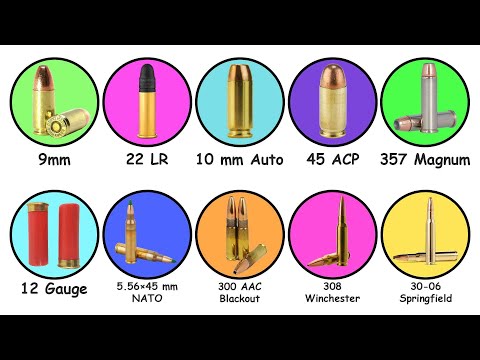
Zoom in on the case mouth and primer pocket in product photos to spot good brass—look for a clean, uniform gold tone without dark carbon rings or dents. Blurry images hide tarnished or corroded cases, so demand sharp detail. For clean powder, you can’t inspect it directly, but check for consistent bullet seating and a neat crimp, which hints at careful loading. Reliable primers show as a flush, centered primer with no flow-back or excessive sealant. A table helps compare what to look for: brass, powder, and primer visual cues.
| Aspect | What to Look For | Red Flag |
|---|---|---|
| Brass | Bright, scratch-free cases | Dark necks or green spots |
| Powder | Tight bullet seating, clean case mouth | Loose bullets or residue trails |
| Primers | Flush, even, with no smudging | Protruding or cratered primers |
If a photo is too fuzzy to judge these, skip it—reliable primers often show a slight ring around the anvil, but only in crisp images. Compare multiple listings side-by-side for the same caliber; variations in finish reveal quality. Trust your eyes over descriptions, because a grainy close-up usually hides problems.
How to Compare Online Ammo Retailers Without Getting Overwhelmed

Start by locking in your **bulk ammo online** must-haves—caliber, grain, and round count—before opening a dozen tabs. Then, narrow your field to three reputable retailers at a time, comparing only final out-the-door costs per round, which includes shipping and any handling fees. Resist the urge to chase every coupon code; instead, spot-check price-per-box across those three, then move to the next trio only if needed. For true efficiency, keep a simple spreadsheet of your favorite bulk ammo online sellers, tracking their baseline pricing for your top three calibers. This instantly highlights who is actually cheaper without daily re-research.
The real trick is comparing apples to apples—always calculate price-per-round, never total box price, or you'll burn out fast.Finally, set a price alert on a single ammo aggregator site for your specific load, letting it do the browsing for you, and you’ll only step in to purchase the best bulk ammo online deal when it hits your threshold.
Using Filters for Caliber, Bullet Profile, and Intended Use (Range vs. Defense)
When comparing bulk ammo online, filter first by caliber to instantly remove incompatible rounds, then narrow by bullet profile—full metal jacket (FMJ) for flat-nosed feeding reliability or hollow points for expansion. Your intended use dictates the final cut: range sessions demand inexpensive, reloadable brass-case FMJ, while defensive loads require jacketed hollow points with proven penetration tests. Matching bullet weight to your firearm’s twist rate prevents accuracy issues at bulk quantities.
- Select 115g vs 124g 9mm based on your pistol’s recoil spring and barrel length.
- Choose round-nose profiles for magazine-fed pistols to avoid feed jams.
- Prioritize bonded-core bullets for defense, not flat-base target rounds.
- Verify grain weight consistency across bulk lots for repeatable point of impact.
Making Sense of Stock Alerts and Backorder Options for High-Demand Calibers
For high-demand calibers, stock alerts are your first line of defense, but only if you configure them correctly at the retailer’s product page—not generic site-wide notifications. When a backorder option exists, weigh it against your 9mm Ammo for Sale timeline: backordering locks in today’s price but ties up capital with no guaranteed ship date. The smarter move is to use alerts for in-stock confirmations while simultaneously leaving backorders for calibers you cannot afford to miss. Ignore retailers whose alerts fire for “related” rounds—that wastes your time. Prioritize sellers offering real-time email or SMS pings, and always set a threshold for how many weeks you’ll wait before canceling a backorder. This keeps your bulk ammo online strategy aggressive yet disciplined. Stock alerts for high-demand calibers beat backorders when speed matters, but combining both hedges against scarcity.
Mastering high-demand calibers means treating alerts as your trigger finger and backorders as your safety net—never relying on just one.
Crunching the Numbers on Bulk Discounts, Loyalty Programs, and Auto-Ship Options
When comparing online ammo retailers, bulk ammo pricing demands more than a glance at the per-round tag. Calculate the effective cost per round by dividing the total, including shipping and taxes, by the round count; a 500-round “discount” often undercuts a 200-round box only after that math. Loyalty programs usually reward points per dollar spent, so estimate your annual volume first—if you shoot 2,000 rounds yearly, a 2% rebate might outvalue a one-time 5% coupon. Auto-ship options lock in a price but can trap you if market rates drop; compute the breakeven against your actual consumption cadence. *A staggered auto-ship schedule at 10% off, stretched across four deliveries, often beats a single bulk purchase that ties up cash for months.* Always compare the final delivered cost, not the advertised percentage, before committing.
Smart Storage and Handling Practices for Large Ammo Orders
When you buy bulk ammo online, the sheer volume demands immediate, smart organization to protect your investment. Start by transferring rounds from flimsy shipping boxes into specialty sports and supply airtight, impact-resistant ammo cans, labeled by caliber and lot number for swift retrieval. Rotate your stock using a first-in, first-out system, placing newer orders behind older ones to ensure consistent performance. Store cans off concrete floors on sturdy shelving in a cool, dry, low-humidity environment, avoiding attics or garages with temperature swings. For truly massive orders, break them into manageable, sealed containers—this prevents moisture damage and eases handling during range trips. Finally, regularly inspect your stored rounds for corrosion or loose primers, replacing compromised cases immediately. These smart storage and handling practices for large ammo orders keep your bulk purchase reliable and ready for years, preserving both safety and performance.
Keeping Your Ammo Shelf-Stable with Proper Humidity and Temperature Control
When you buy bulk ammo online, those thousands of rounds arrive as a single, dense thermal mass, making humidity and temperature control for bulk ammo critical for long-term shelf life. Store cases off concrete floors on pallets or shelves to avoid moisture wicking, and keep the room below 70°F to slow propellant degradation. Use a hygrometer to maintain 30–40% relative humidity—too dry can crack sealants, while excess moisture corrodes primers and cases. *Sealed ammo cans with desiccant packs offer a microclimate, but only if you open them in a dry room to prevent trapping ambient air.* Avoid attics or garages where seasonal swings cause condensation inside packaging. Rotate stock, but never refrigerate, as condensation forms on warm rounds. Consistent, moderate conditions preserve ballistic consistency for years.
Stable below 70°F and at 30–40% RH, with sealed 9.3x72R Ammo for Sale cans and desiccants, keeps bulk ammunition viable indefinitely.
Rotating Your Stock When You Buy in Bulk to Keep It Fresh
When you buy bulk ammo online, rotating your stock is non-negotiable for long-term reliability. Always place newly delivered cases behind older boxes on your shelf, so you naturally grab the oldest rounds first. This first-in, first-out method prevents ammo fatigue—where moisture, temperature shifts, or seal degradation silently compromise primers and powder. Rotate by lot number: write the purchase date on each can with a permanent marker, then use the older lot for range practice immediately. Reserve untouched, newer lots for storage. If you store by caliber, shuffle the bottom row to the top every six months; this redistributes pressure points on cardboard or polymer boxes. Never let a single batch sit untouched for years while you burn through fresh orders—your future self will thank you when every trigger pull fires cleanly.
Choosing the Right Ammo Cans, Ammo Crates, and Organizers for Your Collection
When buying bulk ammo online, choosing the right ammo cans, crates, and organizers starts with matching the container’s internal dimensions to your specific cartridge footprint—.223/5.56 requires different tray spacing than .308 or 9mm. Opt for military-spec metal cans with rubber gaskets for long-term humidity resistance, while transparent polycarbonate crates suit frequent range access because they let you verify calibers at a glance. Modular stackable organizers with adjustable dividers prevent mixed-round chaos inside large orders, and always measure the can’s depth against your box dimensions to avoid wasted vertical space. Label each container’s exterior with the lot number and purchase date for quick rotation, ensuring the most recent bulk batch sits in front. Avoid overfilling—leave a 1-inch air gap to preserve seal integrity. For pallet-sized deliveries, reinforced fiberboard crates with steel corner brackets offer stackable stability without the weight penalty of all-metal systems.
- Match caliber-specific foam trays (e.g., 50-round .223 inserts) to prevent primer-damaging rattle during transport.
- Select cans with pressure-equalizing valves for altitude changes when storing large orders in trailers or basements.
- Use drawer-style organizers with weight-rated slides for loose rounds, avoiding heavy lift-and-dump bins.
- Verify handle weld points on 50-caliber cans—flat-rate bulk boxes can exceed 65 pounds, stressing poor rivets.
Frequently Asked Questions About Ordering Ammo by the Case
When you’re ordering ammo by the case from a bulk ammo online retailer, the biggest question is usually about shipping costs—most sites offer free freight on full cases, but confirm if that applies to your chosen caliber. Another common query is whether a case means the same round count for every brand; typically, it’s 500 or 1,000 rounds, but check the product page because some bulk packs cut corners at 400. You’ll also want to ask about delivery signatures—most carriers require an adult to sign, so plan your day around that drop-off. Cases are heavier than you think, so verify the weight before ordering if you have mobility limits. Finally, always double-check the return policy, since ammo sales are final once the seal breaks, and mismatched lots won’t be exchanged—that’s the quickest way to avoid a headache.
How Many Rounds Do You Actually Need to Qualify as a Bulk Purchase?
There’s no universal threshold for a bulk ammo purchase, but most online retailers shift pricing tiers at **500 to 1,000 rounds** of a single caliber. Handgun calibers like 9mm often qualify at 500 rounds, while rifle calibers such as .223/5.56 typically start around 1,000 rounds to unlock per-round discounts. Buying a “case” (usually 500 or 1,000 rounds) is the practical benchmark, as it triggers lower shipping rates and volume pricing without requiring pallet-sized orders. However, if you’re stocking for a single range session, 200 rounds might feel bulk to you, yet it won’t move the price needle. Q: How many rounds do you actually need to qualify as a bulk purchase? A: At most major online ammo stores, 500 rounds is the entry point for bulk discounts; 1,000 rounds gives you the best cost-per-round and often free shipping.
Can You Mix and Match Different Loads in One Bulk Order?
Yes, most reputable bulk ammo online retailers allow you to mix and match different loads within a single case order, but this typically depends on the SKU structure. When you select a “case” (usually 500 or 1,000 rounds), the price is locked to that specific caliber and grain weight. To combine, say, 250 rounds of 115gr FMJ with 250 rounds of 124gr +P, you must often use a custom “build-a-case” tool or contact customer service, because standard bulk listings are pre-packaged. Some distributors apply a small upcharge for mixed cases due to extra handling, while others offer it free. Always confirm the minimum quantity per load (e.g., 100 rounds) before checkout, since fragmented requests may trigger per-box pricing instead of true bulk rates. Mixed-load case assembly is most flexible when buying from wholesalers with real-time inventory, not fixed pallet deals.
What If a Batch of Bulk Ammo Arrives Damaged or Fails to Fire?
If your bulk ammo case arrives with visibly damaged packaging, crushed boxes, or corroded rounds, do not handle suspect cartridges. Photograph the lot and contact the retailer within 48 hours, as most online dealers require prompt reporting for ammo damage claims. For rounds that fail to fire, never immediately discard them; attempt a second strike in a safe direction, then segregate the duds. Batch-specific failures 9x18 Makarov Ammo for Sale should be reported with the lot number printed on the case, enabling the seller to test the same production run. Reputable sellers typically offer replacement or credit for confirmed defective batches, though shipping costs may not be refunded. Retain all original packaging until resolution.
A Beginner’s Checklist for Your First Large-Capacity Ammo Order
Before your first big buy, lock down a bulk ammo online checklist to avoid costly slip-ups. Start by measuring your firearm’s exact caliber and grain weight—don’t guess. Then, verify the seller’s shipping policy for heavy cases, since freight fees can offset savings. Next, calculate your monthly range usage to size the order realistically, avoiding overstock. Finally, inspect the packaging details—sealed cans or boxes protect against moisture. Follow this sequence: confirm specs, check shipping, set a round count, and review storage prep. 9.3x62mm Mauser Ammo for Sale That first large-capacity order becomes smooth, efficient, and wallet-friendly when you tick these four boxes.