
Frequent shooting sessions often stall when you run out of rounds mid-range trip, and bulk ammunition solves this by delivering a high-volume supply in one purchase. Each cartridge functions identically to boxed loads—with primer, powder, and projectile seated to spec—so you can feed a semi-auto pistol or rifle without adjusting your zero. Buying in 7.62x39 Ammo for Sale larger quantities also lowers cost per round, letting you practice more consistently without changing your firearm’s operational rhythm. For storage, keep sealed bulk packs in a cool, dry place and rotate your stock to maintain reliable ignition across every session.
What Exactly Counts as Bulk Ammo and Why Buy It That Way?
Bulk ammo typically means purchasing cartridges in large quantities—usually 500 rounds or more—packaged in loose boxes or cases rather than individual retail boxes. This definition is practical, not formal; anything exceeding a standard 50-round box, and especially a full case of 1,000 rounds, generally qualifies. The primary reason to buy this way is cost per round: manufacturers and dealers discount bulk orders because packaging, shipping, and handling are more efficient. You also save on repeated shipping fees and avoid stockouts, ensuring you have consistent practice or defense ammunition on hand. Q: Does bulk ammo mean lower quality? A: No—it’s the same factory loads, just sold in larger quantities. The tradeoff is upfront capital, but for regular shooters, the per-round savings compound significantly.
Defining Bulk vs. Boxed: What You’re Actually Getting
The real difference between “bulk” and “boxed” isn’t quality—it’s packaging and price per round. Boxed ammo comes in tidy 20- or 50-count cartons, often with premium branding or defensive loads. Bulk ammo, by contrast, usually arrives in loose 500–1,000-round bags, plastic ammo cans, or plain cardboard trays. You’re paying for fewer individual boxes and less fancy handling, not worse components. Bulk ammo is the smarter buy for high-volume range sessions because you skip the per-box markup. The trade-off? You lose resealable storage and sometimes get mixed headstamps. For plinking or practice, that inconsistency rarely matters—for carry ammo, never skimp on boxed.
- Check the round count and weight—bulk “1,000 rounds” often weighs 25–30 lbs.
- Inspect if it’s new, remanufactured, or pulled—this defines what you’re actually getting.
- Compare cost per round directly against a 50-count box of the same load.
The Real Cost-Per-Round Savings You Can Calculate Yourself
Calculating your actual savings starts with the per-round price, not the box price. Take a 500-round case of 9mm at $275, which equals 7.62x51 Ammo for Sale $0.55 per round, versus a 50-round box at $32, or $0.64 per round—a difference of $0.09 each. Multiply that across 500 rounds for a direct cost-per-round savings of $45. Add shipping and hazmat fees to the bulk total before dividing; a $20 flat fee on that case raises the real cost to $0.59, still cheaper. Compare the same ammunition type and grain weight, then divide the final delivered price by the round count. That single calculation reveals whether buying bulk actually beats small-box pricing for your specific firearm.
When Buying in Volume Makes Practical Sense for Your Shooting Routine
Buying in volume makes practical sense when your shooting routine is predictable and high-frequency, such as weekly range practice or competitive preparation. If you consistently burn through a specific caliber, purchasing a case—often 500 to 1,000 rounds—reduces per-box cost and limits mid-session interruptions. Volume also suits load development, where identical lot numbers ensure consistent velocity and point of impact across many test groups. Bulk purchases lower your cost per trigger pull, which allows more reps for muscle memory without budget shock. However, only commit to volume if you can rotate stock properly and store ammunition in a dry, temperature-stable space.

- You shoot the same caliber at least twice monthly in set quantities.
- Your firearm is reliable with that exact bullet weight and primer type.
- You have dedicated storage that prevents humidity and temperature swings.
- Your practice schedule remains stable for the next 6–12 months.
How to Pick the Right Caliber and Load for Your Firearm
Choosing the right bulk ammunition starts with matching .17 WSM Ammo for Sale caliber to your firearm’s purpose—a carbine for close-quarters work favors lighter, faster loads, while a precision rifle demands heavy match-grade projectiles. For bulk purchases, verify the load’s velocity and bullet weight against your barrel’s twist rate; a slow twist won’t stabilize long, heavy rounds, wasting money on inaccurate ammo. Selecting the optimal bulk ammunition also means prioritizing consistent lot numbers—firearms are finicky, and a new powder lot can shift point of impact. Test a small box first, checking for pressure signs like flattening primers, then commit to a case. Finally, matching load to application prevents over-penetration indoors or inadequate energy afield, so standardize on one proven load for training and a separate defensive round for carry, ensuring both cycle reliably in your action.
Matching Bullet Weight and Grain to Your Gun’s Twist Rate
Your barrel’s twist rate dictates the ideal bullet weight for stability, and buying bulk ammunition without checking it wastes money. A 1:7 twist stabilizes heavy 77-grain rounds, while a 1:12 twist prefers lighter 55-grain projectiles—mismatching causes keyholing and poor accuracy. Before committing to a case of ammo, confirm whether your firearm’s rifling spins fast enough for the grain you intend to stock. Heavier bullets need quicker twists to spin adequately; lighter ones may over-stabilize but still fly flat. For bulk purchases, test one box at your target distance, examining groups and paper tears for tumbles. This ensures your stored supply matches your barrel, delivering consistent precision round after round.
Full Metal Jacket vs. Hollow Point: Which Bulk Type Suits Your Goal

For bulk ammunition, your goal dictates the projectile. Full Metal Jacket vs. Hollow Point: which bulk type suits your goal boils down to terminal effect versus cost efficiency. If you’re burning through thousands of rounds for drills or target scoring, FMJ’s hardened core prevents barrel fouling and feeds flawlessly, making it the undisputed champion for volume practice. However, if your bulk order is dedicated to defense or hunting, hollow points expand on impact, transferring energy and reducing over-penetration risks. To choose effectively:
- List your primary use: competition, training, or self-defense.
- Calculate budget: FMJ gives you nearly double the rounds for the same cash.
- Test both in your firearm: some barrels choke on HP’s open nose profile.
For pure target volume, stack FMJ; for loaded magazines in a bedside safe, invest in bulk HP.
Reading the Box: Velocity, Pressure, and What Those Numbers Mean for Performance

When you grab a box of bulk ammunition, the printed velocity and pressure ratings are your first true performance indicators. Higher velocity generally translates to a flatter trajectory and harder impact, but it often comes with increased felt recoil and barrel wear. Pressure, listed in PSI or CUP, signals how hot the load runs; a higher number can mean more consistent ignition but risks excessive bolt stress or case extraction issues. For bulk buys, prioritize loads where velocity stays consistent across lot numbers, as wide swings indicate poor quality control. Reading the box’s pressure data helps you match the round to your firearm’s action strength and your shooting goals—whether that’s punching paper or defensive reliability.
| Box Number | What It Tells You | Performance Impact |
|---|---|---|
| Velocity (fps) | Muzzle speed | Flatter arc, more energy |
| Pressure (PSI/CUP) | Burn intensity | Consistency, recoil, action stress |
Storing Large Quantities of Ammunition So It Lasts for Years
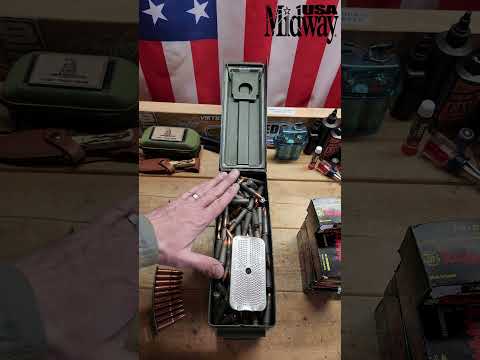
Storing bulk ammunition for the long haul demands a ruthless focus on environmental control, because your ammo’s enemy isn’t time—it’s moisture and temperature swings. Seal every case in military-grade, airtight ammo cans with desiccant packets, then add a visual humidity indicator so you know before corrosion starts. Keep your bulk stash off concrete floors and on wooden pallets or shelving, where airflow prevents condensation from wicking into primers and powder. A stable, cool basement beats a hot garage every time, but if you must use a shed, wrap pallets in vapor barriers and add silica gel regularly. Rotate your oldest stock first to keep inventory moving, yet *properly stored, quality ammunition can outlast your lifetime without losing a single round’s reliability*. Inspect seals twice a year and re-dry desiccants, because a tight lid matters less than the dry air inside it.
Controlling Humidity and Temperature: The Two Factors That Ruin Powder
For bulk ammunition stored by the case, controlling humidity and temperature is non-negotiable because propellant degradation accelerates with every degree above 70°F and every percent of relative humidity past 40%. High 7.62x54R Ammo for Sale heat cooks the stabilizers out of the powder, raising its burn rate and pressure spikes, while moisture causes corrosion on primers and clumping in the granules. You must keep your sealed cans in a climate-stable room, not a shed or garage, and never let the thermometer swing more than 15°F between seasons. Use desiccant packs inside the ammo cans, and check them quarterly—recharge when they change color. A dehumidifier in the storage area is your best ally; if you control these two variables, your powder stays ballistically identical for decades.

Best Practices for Rotating Your Stock to Keep Every Lot Fresh
Implementing a **first-in, first-out (FIFO) rotation system** is the cornerstone of keeping every lot fresh when storing bulk ammunition. Physically arrange new cases behind existing stock so older boxes are always accessed first. Log each purchase’s date and lot number on the case using a permanent marker, then conduct a semi-annual inventory check to identify and shoot the oldest rounds first. For mixed calibers, dedicate one shelf per cartridge type and slide newly acquired lots to the rear; this prevents forgotten backstock from degrading. If you store ammo in sealed ammo cans, add a small index card inside the lid noting the load date and rotation priority. Never stack unlabeled boxes—without visible dating, you cannot execute effective FIFO. Rotate your target practice ammo more aggressively, pulling from the oldest stock for range days, while preserving newer lots for long-term storage.
Ammo Cans, Desiccants, and Labels: Simple Tools to Organize Your Supply
For bulk ammunition, organization is preservation. Start by transferring loose rounds into sturdy military-spec ammo cans, which seal out moisture and prevent crushing. Next, drop a rechargeable silica gel desiccant pack into each can—this pulls residual humidity from the air and protects primers and powder from corrosion. Finally, label every can with caliber, grain weight, lot number, and purchase date using a permanent marker or adhesive tag. This sequence ensures you rotate stock, spot defective batches, and grab the right ammo instantly. Without 5.7x28mm Ammo for Sale labels, you gamble with mixed headstamps; without desiccants, you invite rust; without cans, you invite damage. These three tools turn chaos into a disciplined, long-term storage system that pays off every range trip.
Smart Ways to Use Bulk Purchases at the Range and Beyond
Buying bulk ammunition unlocks cost-per-round savings, but smart use extends beyond the range. First, rotate your stock by shooting the oldest lot first, preventing seal degradation and primer issues. Second, reserve a dedicated portion as a training reserve for dry-fire confirmation and malfunction drills that don’t require live fire. For the range, split your bulk order into session-specific batches—for example, 60% for basic marksmanship, 30% for timed drills, and 10% for zeroing or chronograph testing. Beyond the range, keep a small “proven lot” sealed for that specific firearm’s load development, using the rest for practice. Also, consider sharing a bulk buy with a trusted shooting partner to double your lot diversity without extra cost. Finally, store bulk ammo in ammo cans with desiccant, and mark the purchase date clearly to manage consumption cycles effectively.
Zeroing Scopes and Running Drills Without Crying Over Every Shell
Bulk specialty sports & supply ammo transforms zeroing from a miserly chore into a confident, repeatable process. Instead of flinching at every premium round, you can burn through a full box to confirm your scope’s clicks at 100 yards, then immediately re-confirm at 200, all without budgetary guilt. This surplus of cartridges lets you run high-volume drills—transitioning between targets, practicing rapid bolt manipulation, and firing from awkward positions—until your muscle memory is rock-solid. The real win is stress-free repetition without financial sting, turning every wasted shot into a learning opportunity. With bulk ammunition, you stop counting dollars per trigger pull and start counting hits, building genuine proficiency through sheer, affordable volume.
Breaking Down Bulk Lots into Grab-and-Go Range Bags
Transforming a bulk ammunition case into grab-and-go range bags hinges on pre-planned segregation by caliber, purpose, and session length. First, decant loose rounds into rigid, lightweight containers—such as 50-round plastic trays—to prevent rattling and brass-on-brass damage during transit. Next, assign each bag a specific mission: one for precision rifle loads with a logbook and chamber flags, another for defensive pistol ammo with snap caps, and a third for high-volume training rounds. Finally, label each container with a permanent marker or color-coded tape, then load bags in order of use—zeros first, drills second, and plinking last. This system eliminates 5.56 Ammo for Sale mid-session sorting, protects primers from shock, and lets you leave the house in under 60 seconds without rummaging through a 1,000-round flat.
Sharing a Bulk Order with a Friend: Splitting Costs and Logistics
Splitting a bulk ammunition order with a friend is the fastest way to slash per-box costs without overfilling your own safe. Before committing, agree on exact calibers and quantities to avoid mismatched expectations. Splitting costs and logistics works best when one person fronts the payment for shipping and hazmat fees, then the other reimburses via 7mm PRC Ammo for Sale a payment app—no awkward cash exchanges. For pickup, coordinate a single delivery address and divide the shipment immediately, using a bathroom scale to verify weights. If you share a range trip, break the order there:
- Unbox and sort by caliber at the trunk.
- Count rounds aloud into separate ammo cans.
- Settle the balance before firing a single shot.
Common Mistakes to Avoid When Buying Your First Large Order
When placing your first bulk ammunition order, the .17 HMR Ammo for Sale most common mistake is ignoring storage compatibility—buying thousands of rounds without first confirming you have airtight, moisture-controlled containers, as factory cardboard boxes degrade rapidly in humid environments. Another frequent error is overlooking lot number consistency; mixing different production runs can cause subtle point-of-impact shifts at distance. Avoid over-prioritizing price per round while ignoring shipping weight—freight fees on 5,000 rounds often erase savings. New buyers also fail to verify case finish integrity, ordering steel-case ammo for precision rifles, leading to extraction issues. Lastly, don’t assume caliber interchangeability within a platform; your manual’s twist-rate data determines if heavy-grain bullets stabilize, preventing wasted inventory.
Overlooking Rimlock and Misfeeds in Cheaper Bulk Cases
When you buy cheaper bulk ammunition, the cost savings often come from thinner case walls and looser rim tolerances—two factors that directly increase rimlock risk in pistol calibers like .22 LR and 9mm. Rimlock occurs when the rim of one round slides behind the rim of the next in a magazine or feed ramp, jamming the action. Misfeeds then follow because the deformed case mouth fails to chamber cleanly. Inspect a sample batch under bright light: if case mouths are not perfectly uniform or rims show slight burrs, expect intermittent stoppages. Test-load a full magazine from your actual firearm, not just a single round, because rimlock only appears under spring pressure with multiple cartridges. If you see even one jam, reject the entire lot—cheaper cases rarely improve with breaking in.
Buying Just One Brand: Why Trying a Small Test Box First Saves Headaches
Committing to a full case of one brand without testing is a gamble; your firearm may choke on a specific powder or primer blend, causing malfunctions and wasted cash. Buying just one brand upfront ignores that ammunition performance varies by lot and gun. A single test box reveals feeding quirks, accuracy differences, and pressure signs before you sink money into a thousand rounds. It also protects you from discovering a harsh-recoiling or dirty-burning batch that you are now stuck with. Testing one box lets you compare a potential bulk purchase against your current favorite, ensuring you do not regret a massive investment over a simple compatibility issue.
Always run one test box of any brand before buying in bulk to verify reliability and Ammo Cans & Storage for Sale accuracy in your specific firearm.
Forgetting About Shipping Weight and Handling Fees on Heavy Orders
When ordering bulk ammunition, forgetting about shipping weight and handling fees can silently inflate your total cost by a significant margin. Ammo is dense, so a “great” per-round price often evaporates once freight carriers apply heavy-package surcharges and residential delivery add-ons. Bulk ammunition shipping costs are rarely flat; they scale with both weight and box dimensions, meaning a 1,000-round case may trigger a separate handling fee that you never saw in the cart. Before you check out, always simulate the order with your ZIP code and weigh the final total against the ammo’s cost. *A palletized order might actually be cheaper per round than several small boxes, but only if you verify the freight quote first.* If the vendor lists free shipping, confirm it applies to the final dropped weight—not just the product line. Ignoring this step turns a bargain into a budget breaker.